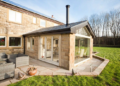
The relaxation area around a home pool should be well-designed: safe, easy to maintain, and suitable for a variety of uses, from morning swims to evening gatherings with friends. A well-designed layout helps prevent excess moisture near the pool, slippery surfaces, and chaotic furniture placement.
To ensure the space is functional all season long, it’s important to determine in advance the locations of the pathways, lounge chairs, shade, showers, accessory storage, and lighting. The more precisely you distribute the functions throughout the area, the more comfortable the relaxation will be and the easier maintenance will be aqualand-pools.com/.
Comfort: Furniture, Shade, Warmth, and Lighting
A comfortable relaxation area is more than just lounge chairs. Consider where it will be convenient to change clothes, where to put drinks, where to hide from the sun, and how to use the space in the evening.
Furniture and Storage: Effortless Organization
Choose furniture designed for outdoor use: aluminum, synthetic rattan, teak, high-quality plastic. It’s best to choose quick-drying textiles with removable covers. For organization, add a closed chest or cabinet for towels, inflatable rings, and toiletries.
- Lounge chairs with adjustable backrests and sturdy legs.
- A low table next to the lounge chairs for drinks and sunscreen.
- A bench or sofa in a dry area for socializing.
- A ventilated storage system to keep things from getting damp.
Shade and wind protection: so your relaxation is not dependent on the weather.
A pergola, awning, parasols with a reinforced base, or an awning over part of the terrace are all suitable for shade. Wind protection can be provided by hedges, decorative screens, and glass railings that don’t block the view but reduce drafts.
Place shade structures so they don’t dump debris into the water or interfere with pool maintenance.
Lighting and Atmosphere: Evening Safety and a Beautiful View
Lighting near the pool serves two purposes: safe movement and comfort. Use multiple lighting levels, avoiding glare directed at the water and seating areas.
- Pathway lighting – low-profile fixtures or recessed markers.
- Accent lighting – highlight plants, walls, and screens.
- Task lighting – in the desk area and near the shower.
Choose wiring and equipment with an appropriate moisture protection rating, and control it more conveniently using timers or switch modes.
Shower, safety, and hygiene: little things that make all the difference
An outdoor shower before and after bathing reduces water pollution and saves time on maintenance. Non-slip mats at the entrance to the house, handrails on the steps, anti-slip pads, and a fence around children are also helpful.
The ultimate goal is to create a space that is comfortable for swimming, relaxing, and maintaining the pool: with a clear, logical layout, a safe surface, adequate shade, well-designed lighting, and storage areas.
Choosing a Pool Surroundings: Non-Slip Materials, Drainage, and Edge Connection
The pool surround determines the safety, ease of maintenance, and durability of the entire relaxation area. It must maintain traction when wet, resist overheating in the sun, resist damage from water and chemicals, and be comfortable to walk on barefoot.
To prevent puddles, slipping, and edge damage, it is important to consider the material, drainage, and proper edge connection. These three solutions should work as a single system.
Summary: What to consider when selecting and installing
Select non-slip materials based on their actual performance in wet conditions and their resistance to outdoor conditions. Optimally suited for:
- Porcelain tiles with an anti-slip surface (structured/matte, with a pronounced texture): stable, easy to clean, and withstands water and chemicals well.
- Concrete slabs and paving stones with a rough texture: practical and repairable, but the quality of the base and grouting is important.
- Heat-treated/bush-hammered natural stone: aesthetically pleasing and grippy, but requires careful selection of the type of stone and maintenance.
- Decking (WPC or thermo-wood) with an anti-slip profile: comfortable for barefoot use, but requires proper clearance, ventilation, and drainage.
- Rubber coverings (tiles/self-leveling systems): extremely soft and safe, but the quality of the composition and UV resistance are important.
Drainage and slopes are always necessary, even If the material is “water-resistant.” Basic principles:
- Slope away from the edge (a guideline is about 1-2%, depending on the surface and area format) to prevent water from flowing under the edge and forming puddles.
- Provide linear drainage (channels) or point catchments in low areas, especially near showers, stairs, sun loungers, and the entrance to the house.
- Consider the base: permeable layers, compaction, and separating geotextiles—this reduces subsidence and erosion.
The junction of the surface and edge is a critical area where cracks and leaks most often appear. To avoid this:
- Leave an expansion gap between the covering and the bowl/curbstone.
- Fill it with elastic sealant and, if necessary, use a sealing cord to allow for expansion/contraction.
- Don’t “lock in” water: the joint must prevent leakage under the covering and ensure moisture drainage to the drain.